

A blog series on women composers from the past and present


My initial background is as a pianist, although composition entered into the picture quite early. Shortly after I started piano lessons, I began to invent little tunes, and at some point I began to write out these little tunes. My piano teacher suggested I take composition lessons, so I did. At this point, I had move over to the junior department at New England Conservatory – as a result, I got to know quite a few musicians my own age, some of whom were also interested in composition. We wrote pieces for each other to perform and played quite a lot of chamber music. This collaborative approach is still a fundamental part of how I work today.
When I started at Boston University, I was in for a bit of a shock: at NEC’s junior department (which they call the preparatory division), I was surrounded by other school-aged composers and performers, and had started to feel quite comfortable as one of the older students in the group. In college, all of the other composers were at least two years older than me, and most of the department was made of graduate students. I did gradually find my own space within this network, and came into contact with a lot of repertoire that has remained essential to my own aesthetic to this day. In London, I have once again found ways to interact with my musical environment. There is a particular kind of attention to detail that many composers here exhibit, which I find quite attractive, and I’ve been fortunate enough to have found a group of very supportive colleagues and mentors. Overall, my musical landscape is quite broad from many perspectives – my approach to harmony, for instance, initially stems from a solid understanding of common practice voice leading, but I draw from a wide variety of post-tonal approaches, including planing, focusing on particular intervals and pitch-class sets, juxtaposing distorted diatonic structures with other pitch collections such as octatonic, and whole-tone scales. In particular, I use a variety of spectral treatments in my approach to harmony and combine this particular approach with quarter tone voice leading in many instances. I find the interaction of musical elements that are often kept separate to be highly interesting and rewarding. Apart from my harmonic landscape, my timbral palette is quite broad as well and I have explored different approaches to timbre over the last few years. This is admittedly something I am still exploring and will probably always continue to explore! As I mentioned earlier, I came into contact with lots of very important repertoire in my undergraduate years: composers such as Scelsi, Saariaho, Grisey, Haas, Benjamin, Knussen, and many others. One very clear memory from this time is listening to Haas’ 30-minute long piece for large chamber ensemble and six pianos tuned a 12thtone apart called Limited Approximations: I remember being absolutely mind-blown and feeling quite disoriented, but fascinated. From this repertoire, I gained insight into how other composers use colour, and would make note when I found particularly pleasing combinations. I tend to listen in a highly analytical way, and tend to be quite good at deconstructing various timbral combinations or figuring out recombinations that sound similar. This deconstructive approach is quite central in my work in general, and certainly is important to how I work with timbre. Something I particularly enjoy is carefully constructing timbral combinations from unexpected doublings, particularly using instruments in slightly odd ranges or subtle use of certain extended techniques. These harmonic and timbral approaches do make themselves known within the piece I have written for the Illuminate concert series, and I found the instrumental combination an interesting one to work with. I am a pianist, and have written several solo piano pieces and chamber pieces that involve piano in one capacity or another. In one way, I find I am quite good at imagining whether or not things are possible and idiomatic on the instrument, and I can always try things out on my own. On the other hand, I have to always be mindful about falling into habits (and this is something that one must do for composition in general!) as I do have certain predispositions towards particular pianistic motives and patterns that tend to appear in the repertoire. In contrast to my work with the piano, my experience with the saxophone is far more limited. My initial dealings with saxophone were in the first year of my master’s degree at RCM, when I was asked to write a piece for clarinet, saxophone, trombone, violin, viola, and cello. The result was a piece called Night Train to I don’t know, where I combine swelling chords with a distorted jazz-inspired section and loud rhythmic material.
However, the following year I had the opportunity to work with Jonathan Radford, who is a phenomenal player. He showed me how the instrument works within different registers in great detail, and demonstrated many effects like multiphonics, slap tongue, subtone, growling, and so forth. At one point we went into a practice room and tried every single alto saxophone multiphonic in the Barenreiter saxophone book – I think there’s around 120 of them – and I recorded them all. Then I went home and produced spectrogram analyses for most of them on Audiosculpt, making note of where the overtones would lie.
The harmonic content of the resulting piece, Mirage (flute, saxophone, piano), is largely based on this analysis: there are many sections in the piece where the saxophone holds multiphonics while the flute and piano parts seem to fuse with the multiphonics because of how the overtones of the various instrumental parts interact. Following Mirage, I have also written a short, blistering altissimo piece for soprano saxophone, also for Jonathan Radford called Isthiophorus. Unfortunately I don’t have a recording of Isthiophorus, but here is the concert recording of Mirage: When I was asked to write a piece for saxophone and piano for the Illuminate concert series, I was excited at the prospect of working with saxophone again. However, I decided to take a more rhythmic approach to the piece than I had in Mirage. The piece initially grew out of two contrasting fragments, one of which was a rhythmic slap-tongue line: 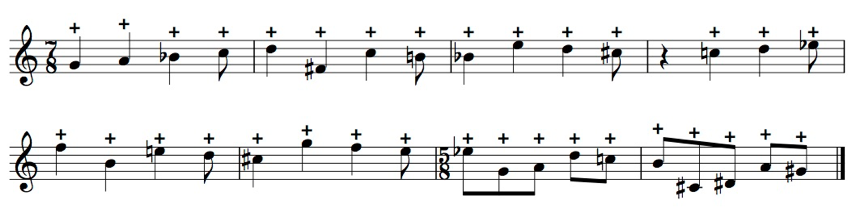
The other fragment is far more lyrical and flowing:
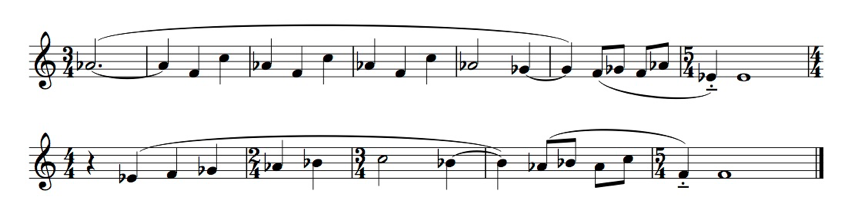
Note that these fragments are at C (in sounding pitch).
At this point, I started to try and make some sense of these fragments: I thought about how they could relate to each other, and see if either of them suggested any related material. Through these explorations I began to gradually see a shape for the piece, and came up with additional related material. The opening of the piece relates strongly to the first fragment with its rhythmic intensity that mirrors the ending of this fragment. As I started to notate the piece, it became clear that there needed to be a driving rhythmic force underpinning the entire structure, even through the lyrical sections (albeit in a more subtle way). The piece has a mechanical aspect to it, and it feels to me as though the energy has been tightly wound up somehow, as if it waiting to break loose. From this aspect I came up with the title, Mainspring: a mainspring is a wound up coil that propels a mechanical toy or clock. Most of the writing process was fairly smooth, and I was able to work things out as I had originally imagined them. However, when I got to the last section, I reached a climactic point where I felt as if I had broken or fractured the energy, and continuing with a continuous rhythmic pulse did not feel convincing to me at all. I felt I needed to come up with a different solution altogether, and ended up with the fractured, disjointed coda that now ends the piece. This is a really exciting project to be a part of, and it’s amazing to have so many performances of Mainspring lined up. It will be really interesting to hear how Naomi and Yshani’s interpretation evolves over the course of the series, and this is something I’m really looking forward to seeing. Meanwhile, I have several other projects lined up: I am currently working on a large orchestral piece for the Lahti Symphony Orchestra, and will have a string quartet premiering in the Santa Fe Chamber Music festival this summer. For more info, concerts, and work, here is a link to my website: www.larapoe.com Looking forward to seeing you all at various concerts!
0 Comments
Written early Feb 2020 Contemplating a blog for Illuminate in the days after the UK has left the European Union, I feel especially alert to the challenges faced by women past, present and future to be heard. Not only musically, as composers and sound artists, but generally so in a society that feels increasingly insular and backwards-looking, with rising levels of hostility towards anyone deemed ‘other’. Even in circles that like to think of themselves as cultured and holding ‘liberal’ values,it too-often still needs pointing out that gender imbalance - let alone that of race, class and disability - is a problem across music as it is elsewhere in society. And - the basic, obvious point - that it’s a problem not just for women but for everyone, since denying access to any group of people ultimately limits the potential of the whole. It is striking how slow promoters, programmers, funders, performers and audiences have been to wake up to the problem. I am glad that some, at least, have done so and are encouraging others to do the same, and that increasing numbers of women composers are finding their voice. Initiatives like Illuminate; like the recentVenusUnwrapped at London’s King’s Place; like Keychange, co-led by the PRS Foundation; like the work that Vick Bain and others are doing to highlight the issue; these and many more are vital if we are to redress what is, ultimately, a matter of social justice which should concern anyone who cares about equal representation and democracy.  I am aghast - though sadly not surprised - at the pathological lengths some people and politicians have been prepared to go to sabotage relations with our continental kin, and the complicity of so many around them. Can music itself help to redress the sociocultural ills that led to this - and will likely lead to worse? Perhaps not directly, as notes sounding in the air. But those notes do not exist in a vacuum: music has always been a product of the society in which it is created. Just observe women composers of yore - and of the present day - who have been rendered mute by social, ideological or financial obstacles. If nothing else, simply by existing - or by being prevented from existing - music offers some kind of testament to the times of its creation, and opens a window onto them for good or ill. We need to be prepared to hear what women have to say in music, even - or especially - if that means having to recalibrate our notions about music history, society, and about what music is or does. At any rate, a few words about my own piece, Inner Sanctum, to be performed by Jelena Makarova for Illuminate in Nottingham on February 29: It was commissioned by the Lower Machen Festival in 2003 for pianist Llŷr Williams, at a time when I was re-orientating after a turbulent period in my life. Jelena will perform the middle movement alone, which is how it was designed if wished. The kernel of the longer work, the music is slow and calm but ambivalent in feel, with disturbance beneath the surface. Rarely, I find, is a sense of rest or peace unequivocal. But I’d hoped nonetheless to impart a sense of that as I was discovering it for myself - and I hope now that we can all find that sense somewhere through the challenges to come. About Steph
Steph is a composer living in mid Wales. Recent commissions include pieces for Uproar, the Marsyas Trio and Astrid the Dutch Street Organ, and this summer sees the premiere at the Fishguard and West Wales International Festival of a piece for the current Official Harpist to HRH the Prince of Wales, Alis Huws. Chair of TŷCerdd, Music Centre Wales, Steph also writes on music for a range of publications including BBC Music Magazine, The Stage and The Independent. She is a contributor to The Music of Simon Holt (Boydell, 2017, ed. David Charlton) and the Cambridge Companion to Women in Music since 1900 (CUP, forthcoming, ed. Laura Hamer). @spower_steph some pieces: https://soundcloud.com/stephpower some older writings on music: http://philosovariant.blogspot.com/ 
Composed in 2018 for wind quintet, Angela Slater’s The Sun Catcher takes inspiration from the folklore-laden popular garden showpiece. Creating a spectrum of colours, textures and brightness, sun catchers are known for their stories of capturing pieces of the sun and bring the lightness down to earth, leaving only darkness above. A truly intriguing theme for a piece which sees Slater take two novel approaches to The Sun Catcher. In her programme notes she mentions that:
“Sun Catcher explores two different musical ideas happening simultaneously in parts of the piece. The first is serene and expressive exploring shimmering light and colour. The second is fast, underlying and increasingly agitated music. This gradually infiltrates each instrument’s line and captures the serene music from before, holding it hostage on a manic rampage and race to the end of the piece.” As part of Iluminate Women’s Music’s 2020 concert season, The Sun Catcher will be performed at the Royal College of Music. I caught up with the Founder and Artistic Director, Angela Slater, to find out more about this intriguing work… 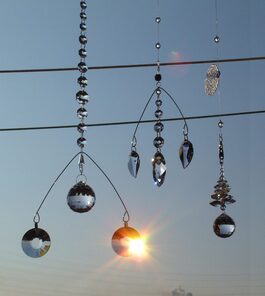
Example of Suncatchers
Where did the inspiration come from for this work?In my works I like to take inspiration from extra-musical materials and most often from the natural world. My piece Sun Catcher draws on both the imagery of a metal Sun Catcher and folklore around the sun catcher myths. A Sun Catcher is a metal object that spins in the wind capturing the sunlight and creating colourful patterns. There are also many myths and folklore tales about how the sun was once captured, and either fixed in its proper sphere or else made to stand still in the sky. Other tales explore the idea of capturing the sun and bringing it down so darkness could prevail. So in my piece Sun Catcher I explore both themes, therefore essentially having two competing musical ideas occurring simultaneously in parts of the piece. The first is serene and expressive exploring shimmering light and colour. The second is a fast, undulating and increasingly agitated music as though the music itself is trying to capture the sun and drag it from the sky. This agitated music gradually infiltrates each instrument’s line and captures the serene music from before, holding it hostage on a manic rampage and race to the end of the piece. Why use a wind quintet for this particular work? This work was originally commissioned by York Late music concert series back in 2018 and the commission was to write for the Atea wind quintet, so the instrumentation came before the idea of the piece. I thought about the potential of colour, range, texture such an ensemble can create and this led me onto the idea of Sun Catcher. How have you managed to make the colours from the sun catcher translate into music? Were there any particular techniques that helped with this?In this piece I am not trying to evoke any particular colour but trying to express varying shades of colour and the shimmering of light you would see visually on a sun catcher. These subtleties in fluctuations of shades and colour are created through techniques such as same note tremolos in the horn part, and timbral trills at various points for the flute, clarinet and oboe. I also make use of practice mutes for the horn, giving the horn this fantastically beautiful subtle colour. Also the clarinet’s undulating material at first evokes this shimmering light of the sun catcher before it becomes increasingly agitated as this material is passed around the ensemble gradually shifting as though trying to capture the sun and drag it from the sky. Can you tell me a bit about the festival that this work will be performed at?Each year Royal College of Music put on a Chamber music festival to showcase the talent of its students and past students. Putting on concerts contributed the variety of music taught and programmed at the college. Last year I was delighted for the first time to be invited to curate an Illuminate concert for RCM. The concert was a great success and the students at the college took a deep interest in the repertoire. Some of the ensembles took the repertoire into their regular concert repertoire. I was particularly proud to see this happening as it is only if young performers take on the music by women from the past and present that it will get heard by audiences. I was so delighted to be invited back and to hear how popular the concert has been amongst students. I am certainly looking forward to 15th February to hear how the students have got on with the repertoire I selected. Can we look forward to hearing some new music from you soon?Yes indeed! I have a busy year ahead regarding composing and performances. I am currently working on a new work for saxophone and piano which will be featured in Illuminate’s next season touring around the UK over the next few months. I am also writing a piece for string quartet and piano with percussion which will be performed at the Vale of Glamorgan Festival in May. In the summer I will be off to the US music festival Tanglewood as a composition fellow. I will be having my work Shades of Rain performed whilst I am there and will be working on a number of new works with musicians while I am there also. I am also writing a piano concerto for pianist Laura Farré Rozada which will be performed in December this year in Birmingham. Ⓒ Alex Burns 2020 Angela’s Website Royal College of Music Chamber Music Festival 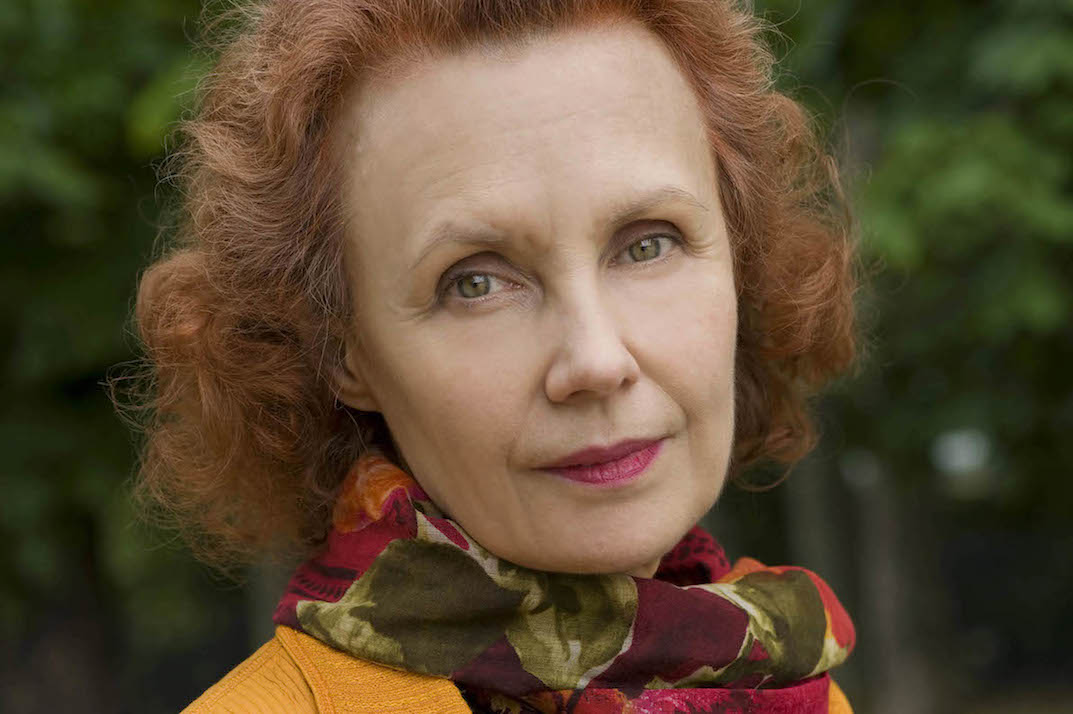
Born in Helsinki in 1952, Kaija Saariaho has become one of Finland’s most progressive and pioneering composers. Studying at the prestigious Sibelius Academy, Darmstadt Academy and at the IRCAM research institute in Paris, Saariaho has had some incredible musical training.
Saariaho’s work within the development of computer-assisted compositions has proven to be one of her most valuable assets. Her knowledge of working with live electronics and tapes is considered one of her trademarks. Her work in this sector has shaped her attitudes and approaches to orchestral composition. Her use of dense sounds and collaboration with live tapes has made works such as Verblendungen some of her most popular compositions. Saairaho has composed music for all sorts of genres, from opera to electronic, her talents are truly endless. Many of her works have been recorded, with some even being programmed in commercial concert halls. Works such as Laterna Magica have been performed at the BBC Proms. An award-winning composer in her own right, Saariaho’s music is unique to her ever-progressing stylet.
Composed in 1997, Mirrorsis scored for flute and cello. As the title suggests, Mirrors is based on symmetry and mirror images of music. Saariaho states in her score notes for this work that there should always be a mirror between the musicians in one or more of the following musical dimensions: rhythm, pitch, instrumental gesture or timbre. These symmetrical nuances can either be vertical or horizontal on the score.
Mirrors was composed in the height of the CD-Rom era, and its purpose was to engage the user so that they could create their own mirrors too. Saariaho supplied the fragments of music on the CD, which are built to be able to change into different forms dependent on the construction. In live performance, the flautist and cellist have room to make artistic decisions in which mirrors they want to create and how they will go about making those effects. The original score sees Saariaho’s own mirror images, which she showcases through rhythms, pitch and gestures. As long as artists take her ideas of creating mirror images, the piece should work and be a really exciting listen for the audience, as well as an artistic endeavour for the performers.
Support our upcoming 2020 concerts:
Illuminate composer Angela Elizabeth Slater discusses her new work 'Ways of Looking at a Blackbird' for soprano and string quartet whilst at our Snape Maltings in August (2019). To hear this piece live please join us for our upcoming concerts: 4th November at St Michael's Near Northgate Oxford at 1.00pm 7th November at University Huddersfield at 1.00pm 8th November at University College Oxford at 7.30pm 9th November at Emmanuel College Cambridge at 7.30pm Illuminate composer Blair Boyd discusses her new work 'Juncture'' for string quartet whilst at our Snape Maltings in August (2019). To hear this piece live please join us for our upcoming concerts: 4th November at St Michael's Near Northgate Oxford at 1.00pm 7th November at University Huddersfield at 1.00pm 8th November at University College Oxford at 7.30pm 9th November at Emmanuel College Cambridge at 7.30pm 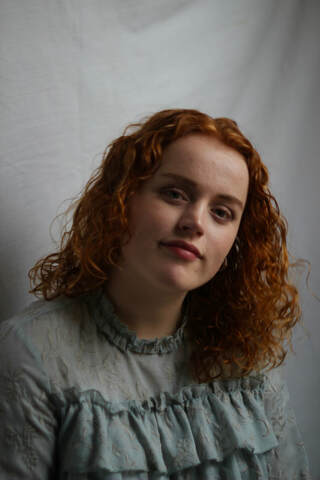
For the past few years, I’ve felt an increasing uneasiness around how any kind of true feminism can fit within the ‘traditional’ model of composing. The existence of Illuminate, and other similar initiatives for the programming of music exclusively written by women, only serves to add further urgency to these questions; how can genuine feminist practice exist within a world which, generally speaking, relies on patriarchal (and capitalist) hierarchies? A traditional model of ‘composing’ — writing music, giving it to performers, having it played, with the attached notion of the ‘genius’, isolation and intellect of the composer — remains largely unchallenged within the academy today. (And, significantly, the legitimacy of composers is often verified by the academy, in the conferring of postgraduate degrees or faculty positions. I can’t think of many conventionally ‘successful’ composers in this country who have not gone through university or conservatoire education, many to PhD level.) Thinking outside of this traditional model is challenging — and has led me to deeper questions about what I’m writing, and why.
These traditional ideas about what composing is are built on patriarchal Western philosophies of creativity and of gender, so much so that it is difficult to even recognise: it is just the normal mode of thinking. Moreover, within traditional pedagogical models for composing, it is difficult to escape from the studying of ‘master works’ which exemplify different ways to intellectually construct a composition, largely within the parameters of a conventional score, or if not, at least a score which exists within a straightforward semiotic system which conveys the composer’s precise intentions to a performer. The locus of ‘creativity’, the generation of ideas, lies with the composer. Moreover, the way we think about composing suggests that the generation of ideas — thinking, logic, reasoning — is central to composition, and that ties it into very fundamental ideas about gender in the West. I summarised this in the opening paragraph of my undergraduate dissertation: “Ever since the birth of the concept of ‘the composer’ in the Renaissance Christian Church, Western constructions of gender have had an impact on who has been allowed to compose. Genevieve Lloyd suggests that “from the beginnings of philosophical thought, femaleness was symbolically associated with what Reason left behind.” The concepts of reason and objectivity are gendered male: masculinity produces culture, whilst femininity is bound to nature. The Cartesian mind-body dualism of the seventeenth century further constructed mental capacity as a masculine trait, and femininity is therefore attached, in oppositional definition, to the body, and ‘feeling’. Western composition also, at this time, moved away from the home and into the public sphere, which reinforced ideological oppositions to women’s participation.” Researching barriers to women being composers for this dissertation led me to much more profound questioning of my own compositional practice than I had expected. There are many societal factors which prevent women from accessing composing as a career; obvious and ubiquitous factors such as childcare, or the socialisation of women to be less confident or ‘pushy’, as well as deeper ideas about what being creative means and who can be creative. However, the most challenging, nuanced and profound avenue of research was around the very definition of ‘composing’, and the radical change many thinkers have suggested is necessary to allow anyone (not just educated white men) to find a place in the world of‘composing’. One example of such thinking can be found in Sally Macarthur’s book Towards a 21st Century Feminist Politics of Music, which examines composing using an intellectual framework provided by Deleuze, a French poststructuralist. The irony of the esotericism inherent in her framework for exploring how to democratise composing is not lost on me. However, the actual practical ideas — focussing on collaboration, improvisation, pedagogical reform, removing the focal point of compositional practice from the academy, challenging conventional value judgements about structure and time in music, considering radical new contexts of reception for new musics — ultimately, how to compose in a genuinely ‘experimental’ way — seem tangible, achievable, and straightforwardly aligned with more broad feminist (as well as decolonial, and anti-capitalist) epistemologies. These ideas have helped form my compositional ideology, rooted in a self-definition as ‘experimental’. This label is not interested in genre definitions, focussing on a conceptual and methodological framework to define my practice, rather than an aesthetic end result, or any retrospectively analysable, intellectual ‘merit’. Thinking about composing in this way has become integral to how I understand my identity as a composer. Other influential ways of thinking about musical contexts along similar lines include Pauline Oliveros’ notion of ‘deep listening’, re-imagining notions of directionality and structure which are so valued by conventional definitions of ‘composition’, as well as Suzanne Cusick’s pioneering thinking around queering conceptions of music, moving away from a patriarchal, gendered understanding of power in music, into a world where there is no force of pre-conceived ‘normality’. This kind of thinking relates all the way back to Sally Macarthur’s Deleuzian framework, in which it is reassuring to remember that a key idea in poststructuralist feminism is that we cannot know or control how the future will look. During my studies I have also engaged with postcolonial writers, which definitely has come to influence how I feel about my own compositional practice, and the urgency and unavodability which I feel around constantly questioning and renewing my approach to creativity. Audre Lorde’s powerful, iconic essay The Master’s Tools will Never Dismantle The Master’s House is ever-present in my mind, serving as a reminder that resistance to systems of oppression (i.e. patriarchy, and coloniality) cannot be achieved using those systems’ language. In the context of composing, this clearly aligns with the above suggestion that traditional aesthetics and processes cannot be used in a project of radical democratisation. This kind of thinking also allows my practice across being a creative musician — a performer, improviser, composer, and writer — to flow freely, allowing cross-pollination of ideas and breaking down boundaries about what I ‘should’ do for certain commissions or in specific situations. Being a performer as well as a composer is integral to my artistic practice. Performing as well as composing, and seeing the two as a fluid overall creative practice, helps redefine ‘composition’ away from an intellectualised exercise with defined, score-based parameters of doing and of results. Performing using my voice also carries special feminist meaning to me. The fundamentally embodied nature of the voice, especially when harnessed towards experimental performance (which can often be visceral and unpredictable), helps counteract the intellectualisation of music which places composition in the masculine domain of the ‘mind’. Ultimately, the embodied nature of vocal performance links my practice to contemporary discourses rooted in the body, such as Judith Butler’s transformative ideas about performativity, and Sara Ahmed’s phenomenological explorations of the idea of ‘orientations’ — engaging my work with queering the definitions of ‘composition’ and ‘performance’. I often look to other female composer-performers for a significant source of inspiration. Much as I obviously love and am interested in lots of the music made by non-female composers and peers too, I firmly believe that it’s really important be able to see yourself in those who inspire you. (One of the many reasons Illuminate is such an important project — demonstrably platforming female composers for the next generation of young women to see.) Women who have significantly shaped my current practice include Jennifer Walshe, Meredith Monk, Errollyn Wallen, Anna Meredith, and Claudia Molitor. These women all practice in different ways, making ideologically experimental music within a variety of aesthetics. I love to engage with the work of these composers primarily through performing and improvising with their work, and imagining my own methods and contexts to perform it, such as interactive performances, self-accompaniment, and layering and fragmenting their pieces. Another important strand of influence for me is popular music. Popular music has provided radical contexts for creativity, political engagement, and expression for women; it is also standard practice for women to perform their own music, as classical music’s hierarchical divide between creator and performer does not exist. Popular music’s short-form nature, as well as its existence within the cultural mainstream, also means that it is heard by a wide audience, providing potential for everyday political engagement. These strands of the fabric of popular music are clearly really engaging, and influential, especially when trying to create a practice which moves away from the esotericism and gender-, race- and class-based exclusions which operate in the ‘classical music’ world. And lastly, I have already mentioned Pauline Oliveros and Meredith Monk; it is clear that the fundamental anti-teleological ideology of minimal music is an interesting thread with the creation of a new anti-conventional compositional practice. Beyond (or within?) the aesthetics of minimal music, I’ve been fascinated by reading explorations of how minimal music can be understood as anti-patriarchal, circular, and self-renewing, in a way which links to Cusick’s notions of queering power in music. My piece for this Illuminate project, GRADIENT, draws on lots of these ideas. I have thought about breaking down structure and directionality, creating materials which are short, repetitive, cyclical, and can be re-ordered as the performers see fit. I have also used a small fragment of text over and over again, invoking the seemingly simple aesthetics of popular musics which belie a more nuanced conceptual basis, and removing the possibility of surface-level analysis of or links between text and music and instead making space for a flexible relationship between all of the performers. The score features faded, simple pastel-ish colours; this is heavily influenced by the work of Claudia Molitor. Her beautiful graphic scores are rich in colour, often in a ‘visually consonant’ way, and I have become fascinated by the potential of including colour in my own scores, whilst still using some conventional notation. Colour is not a conventional element of a traditional score, and not something which can be interpreted in any specific or direct way; the hope is that including colour adds a sense of playfulness and subjectivity, welcoming the performers to have a more fluid and interpretive relationship with the score. The voice is considered in the same way I do as a performer (as something which is textural and embodied), and tried to translate that into a score by using some non-conventional notations to encourage the singer to make the piece something which they can feel comfortable and empowered experimenting with. Ultimately, the piece is delicate, reflective, and small, constantly looping back on itself; I’m looking forward to hearing how the performance shifts and changes throughout the upcoming concerts, as the performers’ relationship with the score and each other shifts and changes too. Sources, and possibly interesting ideas for further reading: Ahmed, Sara. Queer phenomenology: Orientations, objects, others. Duke University Press. 2006. Barthes, Roland. Image-music-text. Macmillan. 1977. Bikini Kill: The Riot Grrrl Manifesto, 1991. (https://www.historyisaweapon.com/defcon1/riotgrrrlmanifesto.html) Cusick, Suzanne. “On a Lesbian Relationship with Music: A Serious Effort Not to Think Straight,” in Biddle, Ian D. Music and Identity Politics. Library of Essays on Music, Politics and Society. Farnham: Ashgate, 2012. Dell'Antonio, Andrew. Beyond Structural Listening?: Postmodern Modes of Hearing. Berkeley; London: U of California, 2004. Fink, Robert. Repeating ourselves: American minimal music as cultural practice.Univ of California Press, 2005. Green, Lucy. Music, gender, education. Cambridge: Cambridge University Press, 1997. Hanoch-Roe, Galia. “Musical Space and Architectural Time: Open Scoring versus Linear Processes.” International Review of the Aesthetics and Sociology of Music, vol. 34, no. 2 (2003): 145-160. Lim, Liza. Luck, Grief, Hospitality – re-routing power relationships in music. Keynote for ‘Women in the Creative Arts’ conference, ANU, 11th August, 2017. (https://lizalimcomposer.files.wordpress.com/2017/08/1-final_lim_rerouting-power-anu-keynote.pdf) Lloyd, Genevieve.The Man of Reason: 'male' and 'female' in Western Philosophy. London: Methuen, 1986. Lorde, Audre. Sister Outsider: Essays and Speeches. Crossing Press Feminist Series. Freedom, CA: Crossing Press, 1984. Macarthur, Sally. "The woman composer, new music and neoliberalism." Musicology Australia 36, no. 1, (2014): 36-52. __________. Towards a twenty-first-century feminist politics of music. Farnham: Ashgate, 2010. Scharff, Christina. Gender, subjectivity, and cultural work: The classical music profession. Routledge, 2017. __________. “Blowing your own Trumpet: Exploring the Gendered Dynamics of Self-Promotion in the Classical Music Profession.” The Sociological Review, 63 (2015): 97-112.
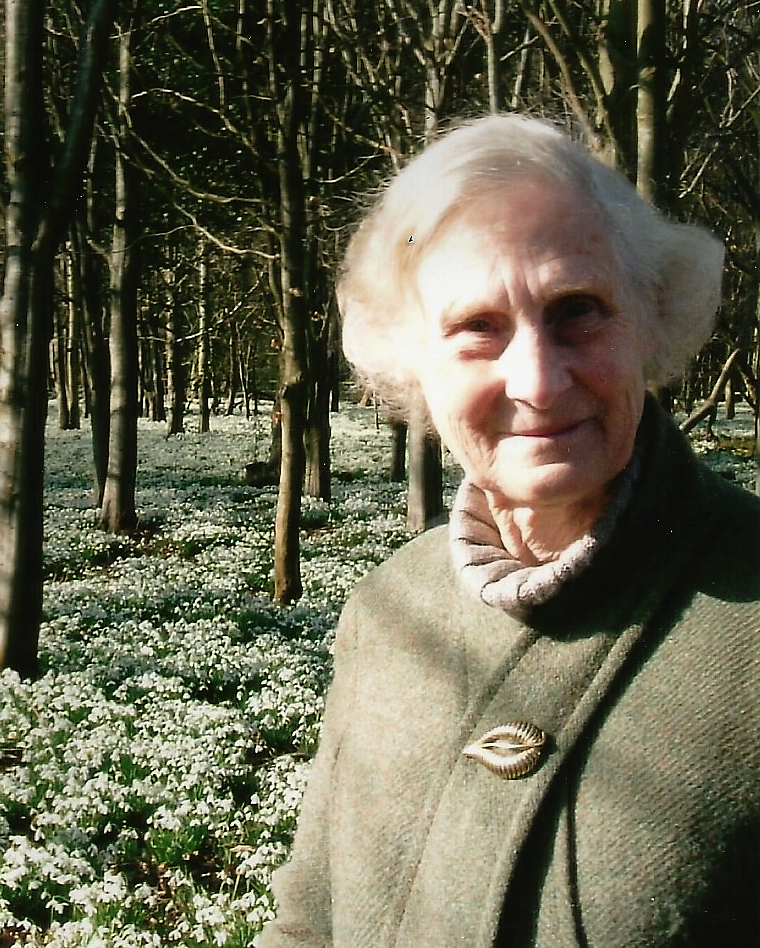
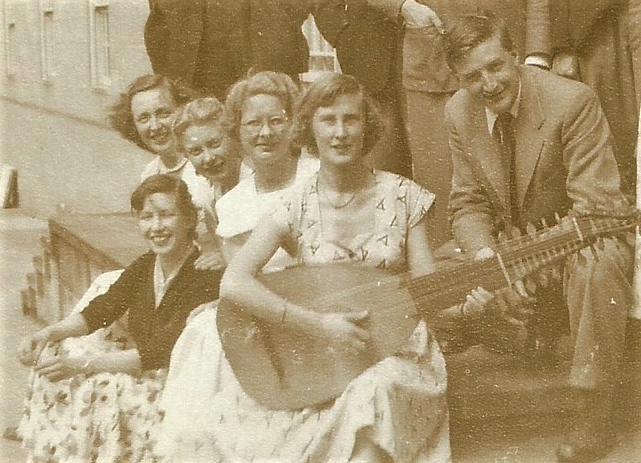
Among the composers featured in Illuminate’s second concert series in 2019 will be Ailsa Dixon (1932-2017), whose Variations on Love Divine for string quartet will be played in Oxford on 8th November. The performance history of Ailsa Dixon’s work offers a striking example of how women composers sidelined in musical history are now being rediscovered. A handful of performances during her most fertile period of composition in the 1980s and ’90s (notably by Ian Partridge, Lynne Dawson, and the Brindisi Quartet), were followed by several decades of almost complete neglect. Then in 2017 a work written thirty years earlier was chosen for premiere as part of the London Oriana Choir’s Five15 project highlighting the work of women composers. These things shall be received its first performance in the spectacular glass-roofed concert hall surrounding the keel of the Cutty Sark, just five weeks before she died. 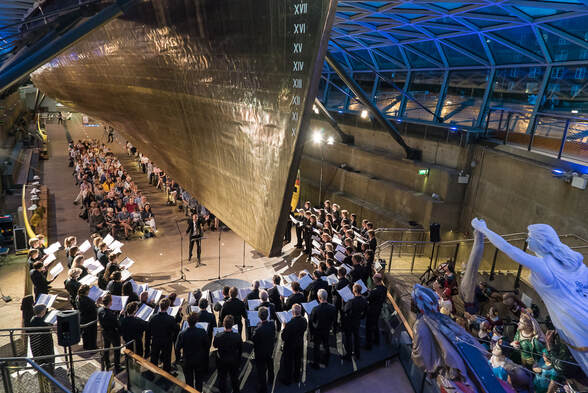 Five 15 at the Cutty Sark, July 2017. Photo: London Oriana Choir / Kathleen Holman With further performances at memorial events and in festivals and concerts around the UK, it is now showing signs of entering the choral repertoire. With its vision of a future when ‘New arts shall bloom’, it seems especially apt that this work came to light in the context of the enterprise to give due prominence to the work of women composers, and has stimulated a revival of interest in her music. 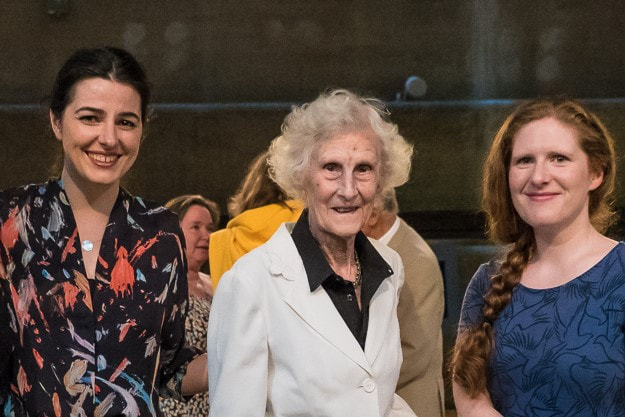 Ailsa Dixon (centre) at the premiere of These things Shall be in July 2017 with fellow composers Dobrinka Tabakova (left) and Cheryl Frances Hoad (right). Photo: London Oriana Choir / Kathleen Holman Ailsa Dixon’s compositions include an opera, chamber and instrumental music, a sonata for piano duet and many vocal works, but the string quartet was central to her writing from the outset. Her first serious work, completed while reading music at University in Durham in the 1950s, was a single movement for string quartet (now lost). When she returned to composition in the 1980s, embarking on her opera Letter to Philemon (performed in 1984), a string quartet was at the core of the instrumentation. In the years that followed, she wrote several further works for quartet. Two years after Letter to Philemon, Dixon’s Nocturnal Scherzo was premiered in 1986 at the Little Missenden Festival by the Brindisi Quartet. 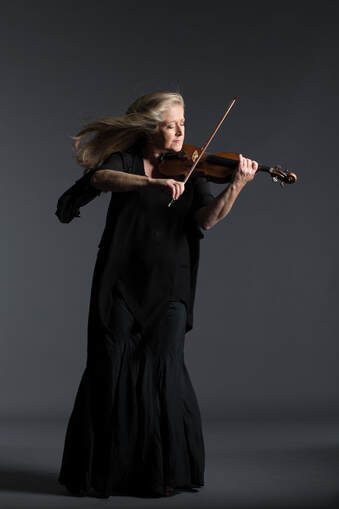 Jacqueline Shave, who led the Brindisi Quartet in the first performance of Nocturnal Scherzo It was paired in performance with Shining Cold, a haunting vocalise exploring the different sonorities of the high soprano voice, strings (viola and cello) and the ondes Martenot (an early electronic instrument, best known for its role in Messiaen’s Turangalila symphony). A note accompanying the two scores in her archive sheds light on her compositional method: 'It seems to me that no music is truly abstract. Pieces which have no words or ‘programme’ must be a condensation either of past experience or of processes going on in the psyche. When I write music which intends to be abstract, an exposition of the main themes materialises before I feel any need to question what I am writing. Then I find it difficult to continue until I have asked myself what the themes seem to signify. Dream-like images emerge in my mind, and from that part of the process develop the ideas of how to use the themes.' The note goes on to explain the dream sequence underlying the Nocturnal Scherzo and its symbolic significance, representing the contest and reconciliation of two halves of the psyche: ‘From a ‘sleep’ theme a slow rising motif suddenly erupts into action. Out of a jack-in-the-box bursts Pierrot, with his white face, his funny gait and his sad little song. He is swept off stage by the macho man whose theme in the cello verges on the bombastic. Pierrot climbs the stage curtains and swings up there, mocking the macho man. Eventually he responds to the macho’s angry call, not to assume unfair advantage, but to come down. They try on each other’s themes, like hats. Scarcely has a harmonious contrapuntal synthesis of their themes developed before the ‘sleep’ theme calls and the lid of the box slowly and gently closes down on them.’ This vignette, combining an apparently trivial piece of commedia dell’arte with a deeper psychological meaning, gives an insight into the emotional significance she attached to the contrapuntal interplay and resolution of musical themes. The Nocturnal Scherzo was performed again in 1992 by the all-female De Beauvoir Quartet, alongside the premiere of Dixon’s next work for quartet, Sohrab and Rustum, written in 1987-8. This was a more ambitious undertaking: a substantial through-composed single movement, inspired by Matthew Arnold’s poem about the tragic encounter between an estranged father and son on opposite sides of a battle between the Tartar and Persian armies. The music is a vivid response to the poem’s human drama and atmosphere. Listeners will not easily forget the opening sequence evoking the river Oxus rising in the starlit mountains. A long, searing high E in the first violin over a deep chord from the lower strings gives way to an eerie chromatic oscillating motif between the two violins, like the scintillation of light on water. Through a gradual crescendo it turns into a fast falling motif as the river gathers momentum, tumbling towards the plain where the drama will take place. A leaping phrase ending with a trill, marked ‘brillante’ and passed between the players, brings the action to life, and gradually the story unfolds as the warriors come face to face. At the close of the piece, its human tragedy played out, the armies light their evening fires and the river pours out into a calm sea under the stars. Ailsa Dixon’s final work for string quartet, the Variations on Love Divine written in 1991-2, represents an unusual foray into religious chamber music. A possible source of inspiration may have been Haydn’s Seven Last Words from the Cross, suggested in the penultimate variation’s echo of the final tremolando earthquake. In a thought-provoking essay on the use of hymn tunes in classical music, Simon Brackenborough placed the Variations in a long tradition of composers’ engagement with hymns, and likened the work to Vaughan Williams’ Fantasia on the Old 104th Psalm Tune, albeit on a smaller instrumental scale. Woven around Stainer’s familiar melody, the Variations offer a musical exploration of the meanings of divine love in a series of scenes from the incarnation to the ascension and a culminating vision of heavenly joy. The work has yet to be performed in concert, but a recording was made by the Rasumovsky Quartet in the mid-1990s. 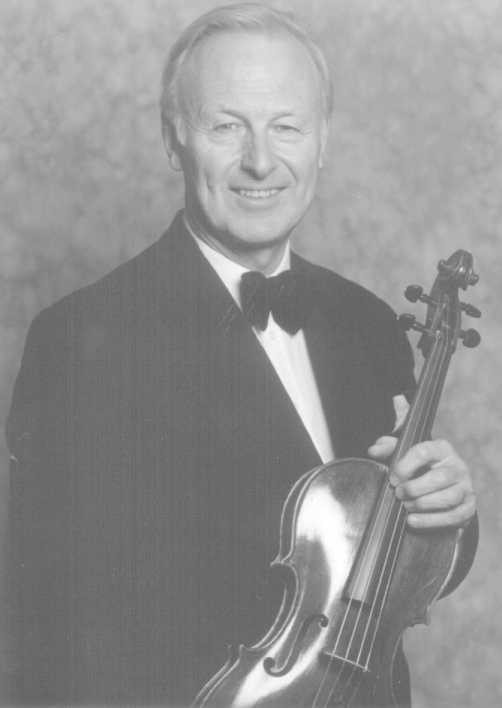 Christopher Wellington of the Rasumovsky Quartet On the recording, the titles or short texts which precede each variation are spoken (by the viola player Christopher Wellington), allowing the meaning to be followed by the listener in a kind of musical meditation. This spiritual journey takes us through a sound-world that is by turns mysterious, lyrical, dramatic, poignant, and finally exultant in ‘The Song of Praise and the Dance of Joy’. Simon Brackenborough comments on the paradox of the work’s scope, at once conceptually expansive and minutely concentrated on a single melody: 'There is something quietly thought-provoking about Dixon’s insistence on using this modest, contented-sounding tune to cover such large theological ground… [suggesting] that a whole world of religious meaning can be revealed through even the smallest means.' He observes the change in her treatment of the theme at the incarnation, when the hymn tune, hitherto buried or splintered into hesitant half-phrases, is heard distinctly for the first time. Elsewhere it is subject to fragmentation, dissonance, and various techniques in the string writing, from pizzicato for the trotting donkey on the journey to Bethlehem, jabbing and martelé attack for the hammering of the nails at the crucifixion, and knocking on the wood for the disciples’ house-to-house calling. Harmonic effects lend much to the work’s emotional impact: the sagging and distorted chords pulling the melody out of tune evoke the wrenching sadness of the disciples watching as Jesus is led away. Reflecting the strong impulse towards redemption underlying the work’s theological scheme, there is elsewhere a yearning for tonal resolution that draws the music from dissonance into a harmonic sweetness at significant moments, such as the centurion’s revelation that ‘truly this was the son of God’. Much of Ailsa Dixon’s music went unheard in her lifetime. Research in her archive has uncovered new works for performance, including a sonata for piano duet, Airs of the Seasons, premiered posthumously in 2018. A set of three songs for soprano and string quartet, The Spirit of Love, dating from 1987-88, will be premiered on 20th February 2020 at St George’s Bristol, by Lucinda Cox and the Villiers Quartet. 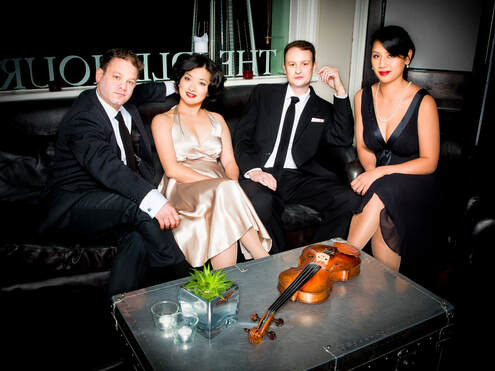 The Villiers String Quartet Most of her scores remain in manuscript, but are now being digitised as part of a project in Finland to rescue the works of neglected women composers. Plans are underway for a recording of her complete works for string quartet by the Villiers Quartet. Meanwhile, the original performances made available on her YouTube channel offer a fascinating insight into her compositional language, hailed in a recent review as ‘most definitely’ that of ‘a British composer with an original musical vision’.
To subscribe to The Friends of Ailsa Dixon for occasional newsletters featuring recent and upcoming performances and news on the availability of scores, please click here
Illuminate composer Sarah Westwood discusses her new work 'Things you don't yet know you feel' for string quartet and soprano whilst at our Snape Maltings in August (2019). To hear this piece live please join us for our upcoming concerts:
4th November at St Michael's Near Northgate Oxford at 1.00pm 7th November at University Huddersfield at 1.00pm 8th November at University College Oxford at 7.30pm 9th November at Emmanuel College Cambridge at 7.30pm 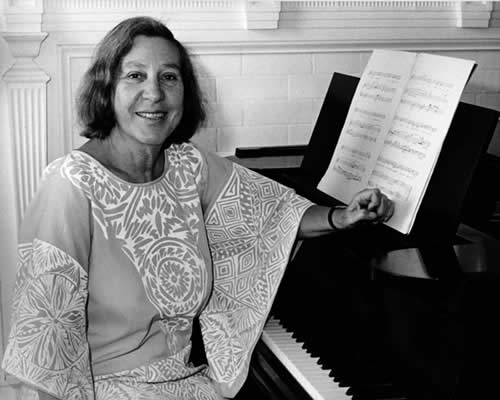 Blog written by Kendra Preston Leonard Vivian Fine (1913-2000) was a child piano prodigy who turned to composition as she entered her teens, studying with Djane Lavoie-Herz and Ruth Crawford. As a performer, Fine premiered numerous works by her colleagues, including those of Aaron Copland, Henry Cowell, and Dane Rudhyar; as a composer, she wrote for both established genres, including string quartet, voice and piano, and orchestra, as well as more novel ones, such as percussion ensemble, cello quartet, and mixed ensembles. Many of her works combine voice and strings, including her Four Songs, written for soprano and string quartet when she was 19 and published in 1933. Rachel Lumsden has analyzed the Crawford’s influence on Fine, noting that Fine cited the older woman as “her first significant musical mentor.” Crawford not only helped Fine to understand that women could be equal to men in composition, but that women did not have to compose using the conservative musical language that had often been deemed appropriate for women composers in the decades before. Crawford encouraged Fine to find a compositional approach that mixed dissonance and consonance and that allowed Fine to express her emotions in such a way that resonated with musical cognoscenti and lay audiences. (Lumsden 2017) The Four Songs are an example of Fine discovering that balance: the New York Times called the work “a particularly pristine, angst-free distillation of Alban Berg—spare, contrapuntal music that is angular but always singable.” (Page 1986) Like other composers of her generation, Fine used freely adapted serial techniques with the frequent occurrence of tonal centricity in her works from this period. While Fine would experiment with more traditionally tonal approaches in the 1930s and 40s, it was an idiom similar to this, first used in her 20s, that Fine would implement throughout her career. She later described her works by saying “most of my other pieces, while not atonal, are freely atonal and freely tonal at the same time.” (Duffie 1986)
For her texts for the Four Songs, Fine chose a lyric from an anonymous sixteenth century poet; “Comfort to a Youth that had Lost his Love,” by seventeenth-century poet Robert Herrick (best known for his “To the Virgins to make much of Time”); and two pieces by James Joyce, “She Weeps Over Rahoon,” and “Tilly.” None of the texts are long, and Fine sets them without repeating any phrases or words, and the result is short but intense miniatures. “When the text is used up,” she once said, “there’s no more text” and therefore no more music. (Duffie 1986) Fine titles the first of these songs “The Lover in Winter Pineth For The Spring,” but the text she uses is normally referred to as “Westron Wynde” or “Western Wind.” The verse, its spelling modernized, is brief: “Western wind, when wilt thou blow,/That small rain down can rain./ Christ, if my love were in my arms/And I in my bed again.” (Anon.) Scored for voice and viola alone, this first song includes both serial elements and musical palindromes. While the ostensible meter is 4/4, Fine makes it clear that the real meter is fluid, as indicated by the slurs in the viola line hat group pitches irregularly, in twos, threes, and fours. Fine begins the song with a viola line that states a twelve-tone row that completes in bar 4, and then begins to repeat the row, shifting into a new form of the row after three notes. However, Fine soon departs from the row to emphasize half step, major third, and perfect fifth relationships that widen into larger and larger intervals, spanning a major tenth at the largest. The vocal line also initially hints at serialism, but close examination of its phrases reveals that the end of the second phrase is an almost exact palindrome of the beginning of the first phrase. Throughout, the voice is rhythmically positioned in complex groupings against the steady quarter notes of the viola, and Fine creates further counterpoint between the two through contrary motion and very deliberate range extremes, placing the viola’s line high when the singer is reaching the lowest pitches of the line and vice versa. These contrasts, the use of repeated, albeit fragmented, pitch class sets, and the palindromes of opening and ending make this song feel complete and whole and deeply satisfying despite its brevity. Like the first song in the cycle, “Comfort to a Youth” is also highly contrapuntal. Fine scores this setting of Herrick’s six-verse lament for voice, violin, and viola and assigns each a very specific texture. The text, which speculates about the afterlife, provides Fine with the opportunity to create different planes mirroring those the narrator cites in the poem. What needs complaints, When she a place Has with the race Of saints? In endless mirth She thinks not on What ’s said or done In earth: She sees no tears, Or any tone Of thy deep groan She hears: Nor does she mind Or think on’t now, That ever thou Wast kind. But changed above, She likes not there, As she did here, Thy love. Forbear therefore, And lull asleep Thy woes, and weep No more. (Herrick 1648) The violin line, with its high, sustained notes, serves as the heaven in which the beloved now resides, while the viola’s part is lower, more complex, more hesitant, more earthy and befitting of a less perfect realm. Finally, the syllabic setting of the poem, with large jumps and numerous sighs (in the form of descending minor seconds), is that of a mourner speaking to another struck by the same grief. Fine also develops interest through her use of irregular and frequently changing meter. Moving freely from 6/8 to 5/8 and 7/8, Fine rejects the poem’s straightforward rhyming iambs and instead captures the manner in which someone who has just lost a loved one would speak of them. In bar 7, for example, Fine sets line 6 in 7/16 meter [misprinted in some scores as 7/8], giving “thinks” and “not” dotted quavers, that descend from a D on “thinks” to a B-flat on “not.” She then indicates a breath mark before the line continues with “on”—a semiquaver that then rushes on, as if the singer cannot pause again without breaking down, to the “What’s” of the following text line, also set as a semiquaver. Accompanying this emotional vocal line, the violin sustains an E for a dotted crochet for the duration of “thinks not” before rising to a quaver F-sharp as the voice finishes the line and begins the next with “on. What’s.” During this bar the viola plays only a semiquaver with a grace note, a D leading to a C-sharp, on the second half of the third sixteenth of the bar, accented and staccato, a reminder of the mortal world below. At the very end of the song, in the last four bars, the violin and viola come together, playing the same rhythms. Beginning an octave apart on C, they then spread apart to an F-sharp (violin) and G (viola), then move to an E-flat and D, respectively, finally coming to rest on an E-natural and C-sharp. Above this slow, dissonant cadence, the vocal line moves mostly in semitones and minor thirds. Fine employs the same method to setting the text here as she did at the beginning: we hear the difficulty of the narrator to get the words out and to breathe. In the final bar, “weep. No more” begins on a G, jumps an augmented fourth to C-sharp, and then resolves to the D below the C-sharp, and painful and exhausted end. Fine turns to James Joyce for her final two songs in this set. Joyce’s “She Weeps Over Rahoon” had already been set to music several times before Fine composed her version for voice and string quartet, but the wealth of settings of this poem speaks to its popularity, at least among the white, middle-and upper-class audiences who are interested in art song. Like the first two songs in Fine’s Four Songs, it speaks to loss and longing for an absent person. Rain on Rahoon falls softly, softly falling Where my dark lover lies. Sad is his voice that calls me, sadly calling At grey moonrise. Love, hear thou How soft, how sad his voice isever calling, Ever unanswered—and the dark rain falling Then as now. Dark too our hearts, O love, shall lie, and cold As his sad heart has lain Under the moon-grey nettles, the black mould And muttering rain. (Joyce, 1927) “She Weeps Over Rahoon” is the only song in the set that uses all four of the instruments from the string quartet with voice, and the texture of the song is much more dense than the previous two. Throughout, the first and second violins have parallel rhythms, usually long, sustained notes separated most frequently by a minor ninth. Both violins’ lines are set in a very high tessitura, perhaps evoking the height of the sky or the moon or the ineffable pain the narrator is experiencing, or, as in “Comfort to Youth”, an afterlife. Against this persistent and very quiet dissonance, the viola and cello have a solo interlude each and a duet. The viola first enters after the voice has sung the poem’s first two lines: in a series of quavers, slurred like the crochets in the firs song to indicate phrasing and metrical beginnings and ends, the viola line moves chromatically, focusing on semitone and whole tone relationships. This seems to prepare for the change drastic change in the vocal line that begins at bar 22. For the first section of the song, the voice is almost static, reciting the text on an A or B. dropping to G# at the end of the first stanza. In bar 22, however, the voice becomes louder and much more active, anxious and chromatic for 3 bars, before returning to a drone, albeit higher pitched, for 3 bars. With the higher drone, the cello enters for the first time with a plaintive solo that rapidly expands into counterpoint with itself, requiring the performer to maintain two melodic lines at the same time. As the voice and cello parts before more complex—the voice again becoming active—the viola returns to add yet another contrapuntal line, repeating some of the previous gestures from its quaver passage but with different rhythmic values. Finally, the viola and cello lines slow and become simple, and the voice returns to the drone, this time on an A-flat, again. Fine’s setting captures the varying moods of grief. The unfeeling, numb, or trudging sensation is represented by the drones, where each syllable is clearly articulated, but where there is no or little melodic interest. At the other extreme is the highly chromatic and intense declamation of a more restless state, the panicked loss of control of grief. The contrasts between the highest and lowest instruments in the string quartet enhance the sense of disparity: the high dissonance of the violins is an unemotional heaven beneath which the earthier timbres and complicated writing of the lower voices suggest the living seeking meaning and resolution. Fine chose as her final text for the Four Songs another Joyce poem, “Tilly.” The title refers not to a person, but references the meaning of the word as something that is “a little bit extra.” The first two stanzas suggest a rustic and not unpleasant scene, the drover moving his cattle in a familiar pattern and state. But the final stanza breaks away from this form to refocus on the poem’s creator, unhappy, injured, and alone. (O’Grady 2010) He travels after a winter sun, Urging the cattle along a cold red road, Calling to them, a voice they know, He drives his beasts above Cabra. The voice tells them home is warm. They moo and make brute music with their hoofs. He drives them with a flowering branch before him, Smoke pluming their foreheads. Boor, bond of the herd, Tonight stretch full by the fire! I bleed by the black stream For my torn bough! Ultimately, this poem too is about grief and mourning: the narrator mourns for themself. Fine embraces the poem’s binary by composing contrasting textures and time signatures for the first two stanzas and the last. Her setting is for the two violins and cello of the string quartet, and begins in 6/8 with the first violin and cello in octaves playing a repeated figure of G-sharp crochet-C-sharp quaver, F-sharp quaver-F-natural crochet, a seesawing gesture that could represent the movement of the cows or the drover’s calls to them. The vocal line, which moves from time signature to time signature independently from the strings, nods to the descending fifth of the string figure by descending from E to A on “He travels” before asserting its own melodic identity. Twice, for lines 2 and 4, Fine uses a short tone row: D F E-flat A-flat C-flat D-flat in the same rhythm to create musical a rhyme. As the second stanza begins, the first violin and cello have begun to diverge, and the second violin enters just after the voice, setting the stage for the texture of the final stanza with sustained double-stops mostly in major and minor ninths. The vocal line becomes more fluid and less speech-like, with large jumps between notes and less correlation between syllables and note length. The first violin’s line is a carefully constructed improvisation-like variation on the crochet-quaver, quaver-crochet motif from the song’s beginning, while in the cello, a similar exploration moves radically away from its origins into chromatic triplet and quintuplets played pizzicato. Both improvisatory passages come to an end with the last lines of the second stanza, and the second violin alone holds an E-flat-D double-stop as the tempo slows slightly for the third stanza. Fine sets the stanza in the free and chromatic style as the previous text-setting, still emphasizing major and minor seconds and fifths. The last two lines of the text are marked lento, and the second violin drops the double-stop and moves to a very high G-sharp as the singer descends from G-sharp to C-sharp to A. Fine’s Four Songs are small but exquisitely detailed, short but rich, and packed full of meaning, emotion, and interest. Fine shows her mastery of creating musical puzzles and solutions, using established methods in conjunction with the free spirit of improvisation, and in setting text in meaningful and multiply fascinating ways. In these four pieces about grief and loss and mourning, there is text and music to touch any listener. Notes Anonymous. c. 1515-1540. “Westron wynde”. British Library ms Royal Appendix (RA) 58. Duffie, Bruce. 1986. Interview with Vivian Fine. November 8. http://www.bruceduffie.com/fine.html Joyce, James. 1927. “She Weeps Over Rahoon”. From Pomes Penyeach(Paris: Shakespeare and Company). Lumsden, Rachel. 2017. “‘You Too Can Compose’: Ruth Crawford’s Mentoring of Vivian Fine”. MTO23, no. 2 (June 2017), 2. http://mtosmt.org/issues/mto.17.23.2/mto.17.23.2.lumsden.html Herrick, Robert. 1648. Hesperides: Or, The Works Both Humane & Divine. Early English Books Online. https://quod.lib.umich.edu/e/eebo/A43441.0001.001/1:5.1035?rgn=div2;view=fulltext O’Grady, Thomas. 2010. “Poetry and Grief: James Joyce’s ‘Tilly’”. The Boston Irish Reporter21, No. 10 (October), 18. http://irishmatters.blogspot.com/2010/10/poetry-and-grief-james-joyces-tilly.html Page, Tim. 1986. “Music: Song Cycles of 20’s and 30’s”. The New York Times(September 30), 15. https://www.nytimes.com/1986/09/30/arts/music-song-cycles-of-20-s-and-30-s.html |
Authors
Archives
February 2023
|
 RSS Feed
